Foaming and Anti-foaming Agents: A Culinary Perspective
Nov 21, 2026

Written by
Simon LovedayWho doesn’t love foamy foods? Icecream, bread, cappuccino, meringues, macarons, madeleines, sponge cakes, mousses, marshmallows – yum!
What is a foaming agent and why do we need them? The EU food regulations define foaming agents as “substances which make it possible to form a homogenous dispersion of a gaseous phase in a liquid or solid foodstuff”. What does that mean in practice?
If you shake up water in a bottle, it gets foamy, but only for a few seconds then the bubbles pop and the foam collapses. If you shake cold milk in the bottle, you get a longer-lasting foam, because the milk proteins stick to the surface of the bubbles and slow down their collapse – maybe for a few minutes.
If you love cappuccinos you’ve probably watched the barista foam the milk with a steam wand. By pumping steam through the milk you get a very fine, silky foam that keeps your coffee hot while you read the news. Two things are going on here – high pressure steam creates really tiny bubbles, and milk proteins that are unfolded by the heat stick to the surface of bubbles. Smaller bubbles, stronger protein layer, long-lasting foam.
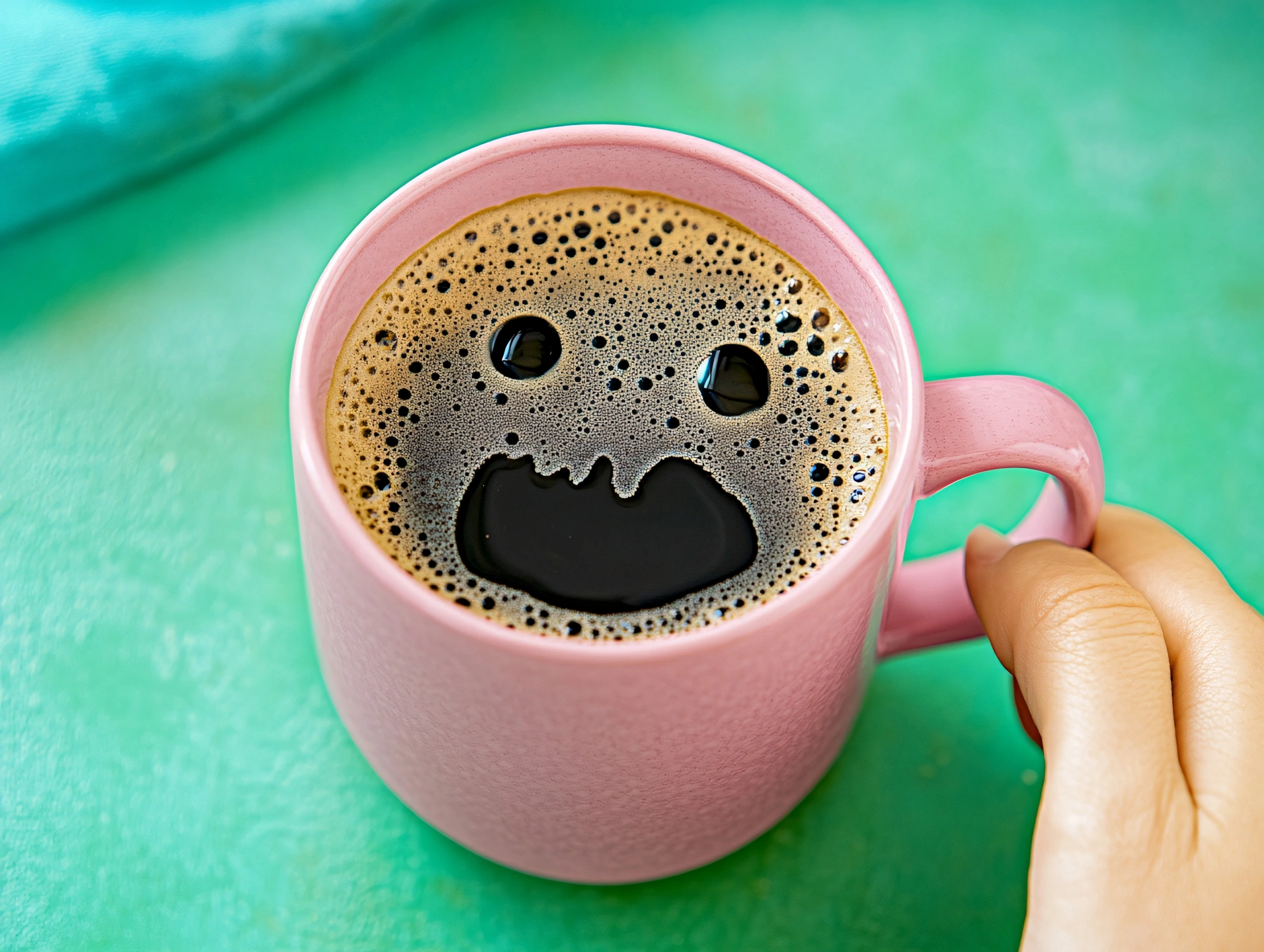
credit: Vilkasss via pixabay
Something similar happens in icecream – milk proteins are partly unfolded as the icecream mix is pasteurised, then during homogenising they unfold and emulsify the milk fat. The mixture is then cooled and held at low temperature, which allows other emulsifiers in the mix to replace protein at the surface of fat droplets, and makes the fat to start solidify. The emulsifiers in icecream are smaller and less robust than protein molecules, so now the emulsion is less stable against coalescence (which is a good thing!).
After that, it's into the dasher for whipping and freezing, where air bubbles are incorporated and those partially-solidified fat droplets coalesce around the bubbles and stop them from popping, and the foam is frozen in (thanks Alistair Carr for the icecream wisdom!). Meringues, sponges, mousses and marshmallows also use proteins to make stable foams, then cooking sets the protein and ‘freezes in’ the foaminess.
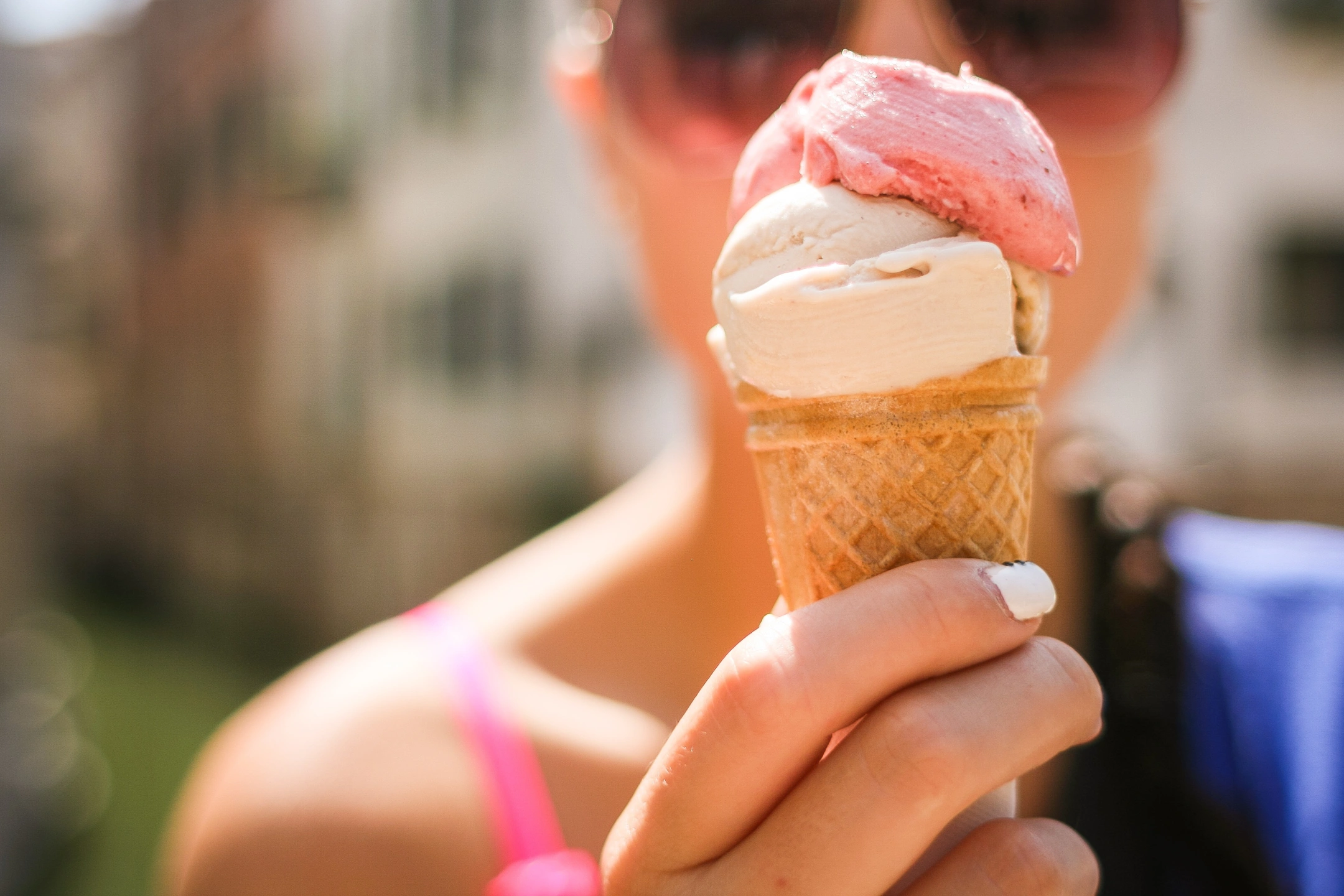
A foam in a foam - yep, the icecream is a foam and so is the cone. credit: PicJumbo via Pixabay
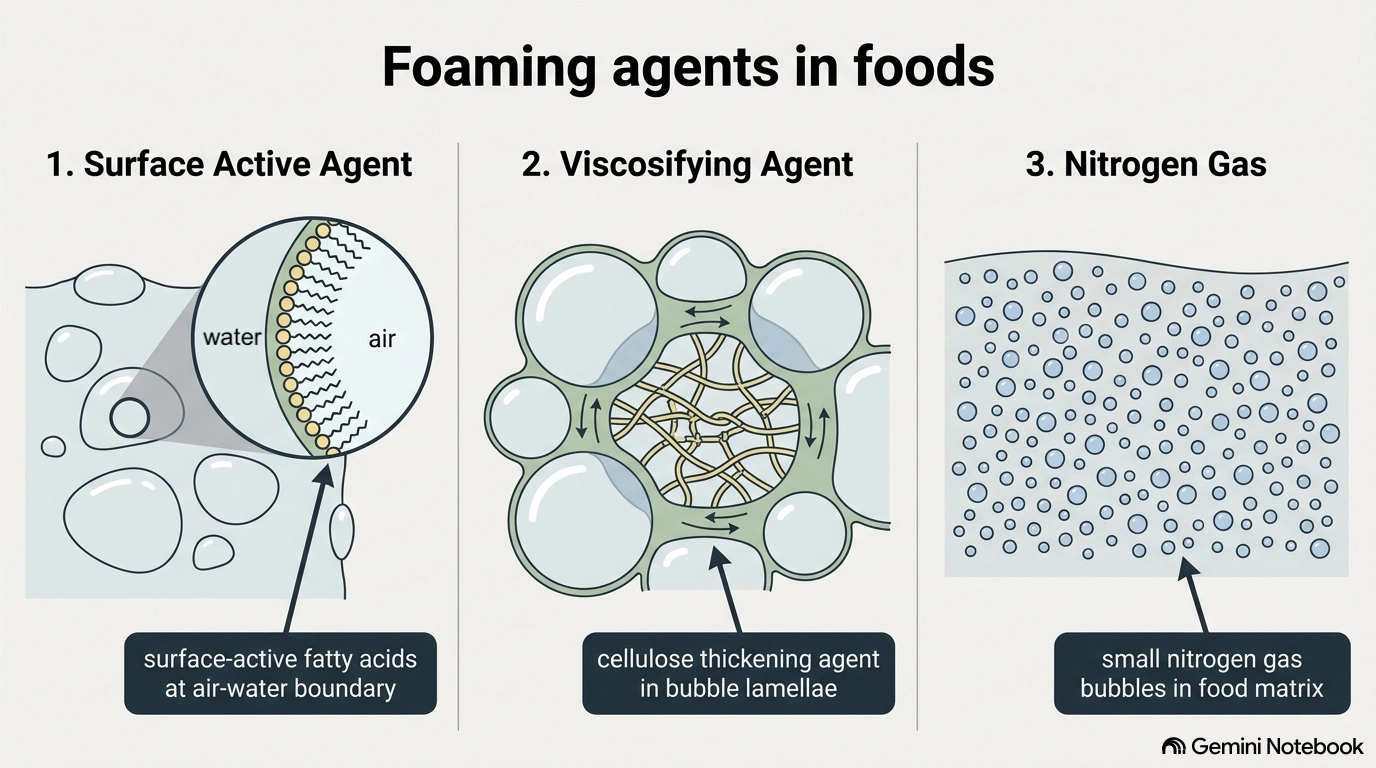
You could say that proteins in these foods are foaming agents, but if you look up the e-numbers of foaming agents in processed foods (EU info, Australia/NZ info), they’re not proteins. In the US, foaming agents are labelled as a type of ‘surface-active agent’ (US info). On food labels you might see foaming agents like ‘stearic acid’ (e570), ‘methyl ethyl cellulose’ (e465), or even nitrogen gas.
Proteins are big, bulky, heat-sensitive molecules that absorb slowly and weakly at the surface of air bubbles. Sometimes you need a small, zippy, strongly-absorbing ingredient like stearic acid, which is an air-loving fat, a bit like the water-loving fats we met in the Emulsifiers episode. Another strategy to slow down foam collapse is make the liquid between bubbles more viscous – that’s what cellulose derivatives do. Finally, you can supercharge your foam by injecting pressurised gas, like carbonation in a sodastream machine or nitrogen in your Guinness.
credit: Simon Loveday via Gemini Notebook
Sometimes foams are annoying, like when your pot of pasta or rice boils over and burns on the stove. Time to reach for the anti-foaming agents, like vegetable oil – a bit of oil in the rice stops it from boiling over. Anti-foaming agents are the mortal enemies of foaming agents – they kick foaming agents off the surface of bubbles, pop the bubbles and collapse the foam.
Imagine you’re boiling 500 kilograms of strawberry jam in a giant pot. As water boils off and the jam gets thicker and thicker it starts to bubble and foam until… aaarrggh it’s boiling over! You happen to have a jar of antifoaming agent called DPS – one teaspoon into the 500 kilogram cauldron and your foam is under control: no boil over, no burn-on. Whew!
Time for a macaro n with whipped cream to go with your cappuccino – foams, foams and more foams…yum!

The author making strawberry jam in his Melbourne townhouse kitchen. Why yes, I do have a spoon surgically grafted to my left index finger, thanks for asking. credit: Land_of_Books_YouTube via Pixabay